
What does out of gauge mean in UK fulfilment?
Out of gauge means the goods exceed the dimensions a standard handling system assumes. Here is what that means in a warehouse, and why it changes everything downstream.
The short answer
Out of gauge means the goods do not fit the dimensions that a standard handling system assumes. That is the whole definition. Everything else is a consequence of it.
The term travels across logistics with slightly different meanings depending on who is using it. In shipping, out of gauge describes cargo that will not fit inside a standard container and needs a flat rack or open top. In road freight, it describes a load that exceeds normal trailer dimensions. In warehousing and fulfilment — which is what this article is about — it describes stock that will not sit sensibly on a standard pallet, in standard racking, or in a standard parcel network.
That third meaning is the one that decides whether a 3PL will take your account.
Out of gauge is relative, not absolute
There is no single measurement above which an item is officially out of gauge. It depends entirely on the system you are measuring it against.
A 2.4 metre boxed pergola is out of gauge for a shelf-based e-commerce warehouse and entirely unremarkable in a building set up for structures. A 400kg piece of machinery is out of gauge for a parcel network and routine for a forklift and floor space. The same item can be in gauge in one warehouse and refused by another down the road.
This is why "are you out of gauge?" is a bad question and "what are the dimensions and weight?" is a good one. When you contact a 3PL, lead with the numbers. Length, width, height, weight, whether it can be stacked, and whether it can take load on top. Those five facts settle the conversation faster than any label.
It also explains why brands get wildly different answers from providers who all describe themselves the same way. Two warehouses can both call themselves a 3PL for bulky goods and mean completely different things by it. The word is doing no work. The measurements are.
The things that push stock out of gauge
Note that the last three have nothing to do with being large. A boxed glass-topped table can be a perfectly ordinary size and still be out of gauge for practical purposes, because you cannot treat it like the box next to it.
- Overhang — the item is longer or wider than the pallet under it, so it fouls the racking beams or the neighbouring pallet.
- Height — the item exceeds the clear height of a rack bay, or cannot be split into two levels.
- Weight — the item is within the footprint but over the load rating for the location.
- Load-bearing — the item is a fine size, but nothing can be stacked on it, which strands the space above it.
- Shape — the item is not a cuboid. Rolls, frames, curved goods, and irregular assemblies waste space and resist wrapping.
- Fragility — the item is nominally stackable but should not be, because the packaging will not carry the load safely.
Why standard 3PLs say no
When a mainstream fulfilment provider declines out-of-gauge stock, it is rarely because they cannot lift it. It is because their economics do not work.
A shelf-and-tote warehouse makes money on density and repetition. Every location holds a predictable amount, every pick takes a predictable time, and the whole building is priced on that. One item that occupies four locations, needs two people to move, cannot be scanned at the same station, and blocks an aisle while it is handled will lose money at their standard rate. They are not being unhelpful. They are being accurate.
The problem for you is that this rejection often arrives late, after your stock has already been quoted at parcel rates. It is better to find out on the first call.
The worse version is when they say yes. A provider who accepts out-of-gauge stock into a building that was not designed for it will store it somewhere it does not belong, handle it with equipment that is not quite right, and pass the consequences back to you as surcharges, damage, and slow picks. A clear no on day one is a better outcome than an optimistic yes that unravels in month four.
This is the honest case for specialists in general. It is not that specialists are more capable people. It is that a building, its equipment, its team, and its pricing all get shaped around the goods that pass through it, and no operation can be shaped around two opposite things at once.
What changes in the warehouse
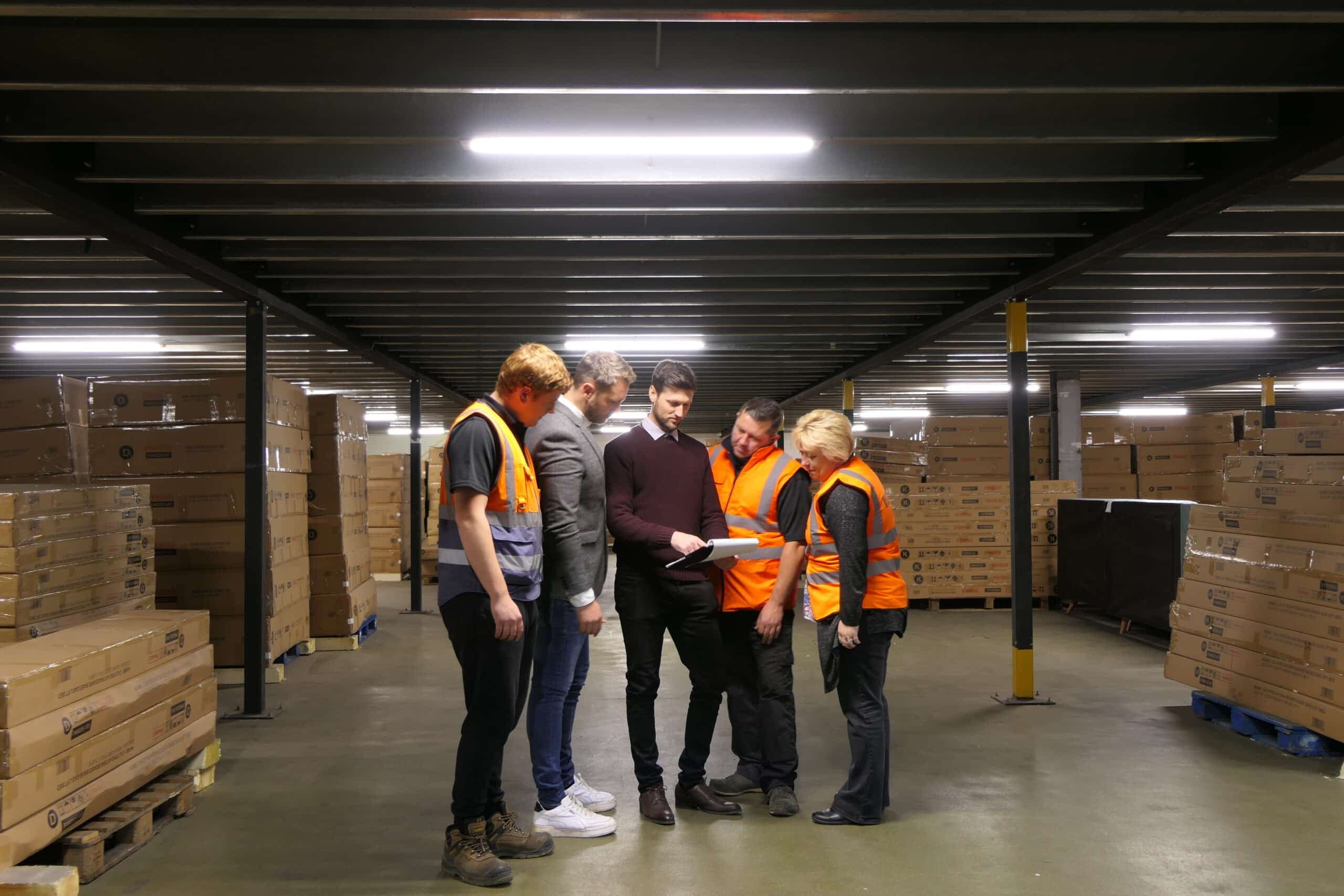
Once stock is out of gauge, almost every step of the operation adjusts.
Receiving changes first. Out-of-gauge goods usually arrive in containers rather than on a courier, so unloading is a planned event with the right equipment and people, not something that happens at a goods-in door between parcels. Inventory checks and discrepancy reporting have to happen at that point, because once a large item has gone into a floor-serviced area, recounting it is expensive.
Put-away changes next. Instead of a location lookup, someone has to decide where this item lives — stacked and wrapped onto a bespoke oversized pallet, in a rack bay sized for it, or in a floor area planned for access rather than density. That is a decision, and decisions need to be recorded so the next person can find the goods.
Picking changes too. A pick that needs two people, a forklift, or a clear aisle cannot be scheduled like a shelf pick. It has to be sequenced with the other movements in the building, which means a picking list for out-of-gauge goods is a plan for the day rather than a route around the shelves.
Dispatch changes last and most visibly, because the item will leave on a pallet network or a two-person delivery rather than a parcel van. That in turn changes what the customer experiences — booked delivery slots instead of a tracking number, and sometimes an installation instead of a doorstep drop.
The cumulative effect is that out-of-gauge fulfilment is a different operation wearing the same job title. Every step is recognisable, and none of them is the same.
Out of gauge and the paperwork
One underrated consequence is that out-of-gauge stock is harder to describe accurately, and inaccurate descriptions cause real cost.
If your product data says a boxed sofa is 1.2 metres long because someone measured the sofa and not the box, every downstream system is now wrong. The carrier quote is wrong, the storage plan is wrong, and the first surprise arrives when the item physically will not go where the system says it should.
Measure the packaged item, not the product. Measure the largest carton in a multi-box SKU and record the total shipping weight of the set. Record whether the item can be stacked and whether it can be laid down. These are unglamorous data fields and they prevent most of the arguments that out-of-gauge fulfilment produces.
Keeping visibility on stock you cannot shelf
There is a persistent assumption that out-of-gauge operations are less organised than parcel operations — more clipboard, less system. It does not have to be that way, and if your stock is valuable it should not be.
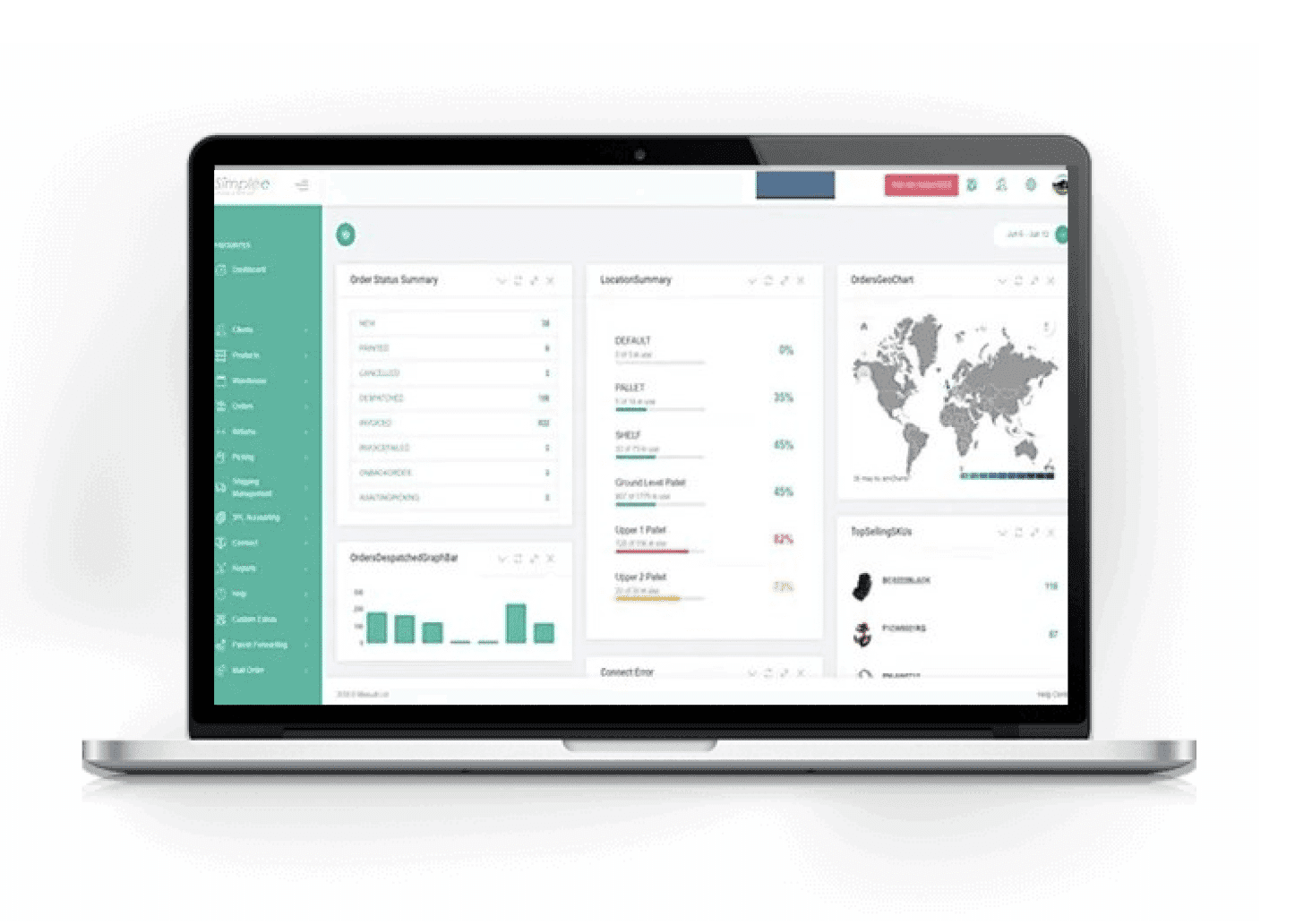
The same things you would expect from a modern 3PL apply: inbound arrivals recorded with checks and discrepancies, stock locations and movements tracked, order status visible, returns and spares logged in the same operational view. SIMPLEE UK clients see this through the Team Simplee portal. The stock is awkward; the record of it should not be.
How to tell whether you have an out-of-gauge problem
You probably do if any of the following sound familiar. Quotes come back much higher than you expected once you send dimensions. Providers stop replying after you send photographs. Your current 3PL charges surcharges you did not budget for. Your damage rate is concentrated in a handful of large SKUs. Or you are paying for a small-parcel operation to handle something it was never built for, and absorbing the difference in customer service time.
If that is the picture, the fix is not a better rate from the same kind of warehouse. It is a warehouse where your stock is the normal case rather than the exception. SIMPLEE UK works with furniture, garden goods, machinery, and anything else too big or awkward for standard parcel networks — from Liston, near Sudbury in Suffolk, within 35 miles of the Port of Felixstowe.
Send dimensions and weights to sales@simpleeuk.com, or call +44 1787 378154, and we will give you a straight answer about fit.
Related SIMPLEE UK services

Warehouse fulfilment for bulky & out-of-gauge goods
Inbound shipping, receiving, picking, packing, dispatch, and two-person delivery support for furniture, garden goods, and other awkward stock.
- Inward shipping coordination
- Inventory checks and discrepancy reporting

Pallet storage & out-of-gauge pallet solutions
Pallet storage for standard, oversize, stackable, racked, and outdoor stock profiles.
- Out-of-gauge pallet solutions
- Outdoor and racked storage options
Warehouse technology — stock visibility & reporting
Warehouse visibility, reporting, order status, stock management, and courier integrations through Team Simplee.
- Team Simplee portal access
- Real-time order and stock visibility
Related posts
Out of gauge pallet storage explained
What happens when your stock overhangs the pallet — bespoke oversized pallets, racked versus floor decisions, and how out-of-gauge storage is actually priced.
Read articleStorage for awkward goods that do not fit racking
Racking assumes your stock is a neat cube on a standard pallet. When it is not, you need floor storage, stillages, and a warehouse that plans around the product instead of the shelf.
Read article